

Investing Kevin Kelly, CFA Investing Kevin Kelly, CFA

Market Movements Q2 2020: The Sequel

In our estimation and experience, most predictions are largely speculative and unreliable. The only prediction we are prepared to make is based on historical evidence that prices/economies tend to recover after economic shocks.
By SJS President Kevin Kelly, CFA.

EQUITY MARKETS

Last quarter, global markets experienced a synchronous drop in equity asset classes. Investors around the world arrived at lower market valuations that included falling revenues and newly identified risks. We can now offer a more encouraging picture as a rising trend has been evident in the same asset classes during the second calendar quarter:

Source: Morningstar.com, July 1, 2020. Equity asset classes are considered representative by SJS Investment Services based on actual results of institutional mutual funds within these categories (DFQTX, DFIEX, DFCEX, and DFGEX). Actual performance f…

Source: Morningstar.com, July 1, 2020. Equity asset classes are considered representative by SJS Investment Services based on actual results of institutional mutual funds within these categories (DFQTX, DFIEX, DFCEX, and DFGEX). Actual performance for each client may be different. Past performance is no guarantee of future returns.

As of June 30, 2020, the quarterly gain in major equity asset classes spanned a positive range of 12 to 22%.

THOSE DOGGONE PREDICTIONS!

It is worth re-stating that in our estimation and experience, most predictions are largely speculative and unreliable. The only prediction we are prepared to make is based on historical evidence that prices/economies tend to recover after economic shocks.

But we acknowledge that things can get worse from here and the current upward trend is in no way guaranteed to continue. Predicting where the dog at the end of the leash will go is range-bound at best…and even then, the dog can sometimes break his leash!

Investments, by their nature, are unpredictable. Yet we continually strive to manage your investments so that you can have the confidence that your MarketPlus® portfolio has been trained at obedience school!

If you ever find the investment markets make you “uncomfortable,“ let us do the worrying for you, so you can focus on the people and causes that matter most to you. We are always here for you, to lend an ear, to listen, and assist!


Important Disclosure Information:

Past performance is no guarantee of future results. There is no guarantee investment strategies will be successful. Diversification neither assures a profit nor guarantees against a loss in a declining market. MarketPlus Investing® models consist of institutional quality mutual funds. Mutual fund investment values will fluctuate, and shares, when redeemed, may be worth more or less than original cost.

Indices are not available for direct investment. Their performance does not reflect the expenses associated with management of an actual portfolio. The performance of the indices was obtained from published sources believed to be reliable but which are not warranted as to accuracy or completeness.

Hyperlinks to third-party information are provided as a convenience and we disclaim any responsibility for information, services or products found on websites or other information linked hereto.


Suggested Reading


Read More
Financial Planning Scott Savage Financial Planning Scott Savage

Grocery Stores And Equilibrium

As Americans, we have a history of navigating uncertainty and innovating our way through challenges. I believe we will get to the other side of the COVID-19 challenge together and grow through the process.

By SJS Founder & CEO Scott Savage.

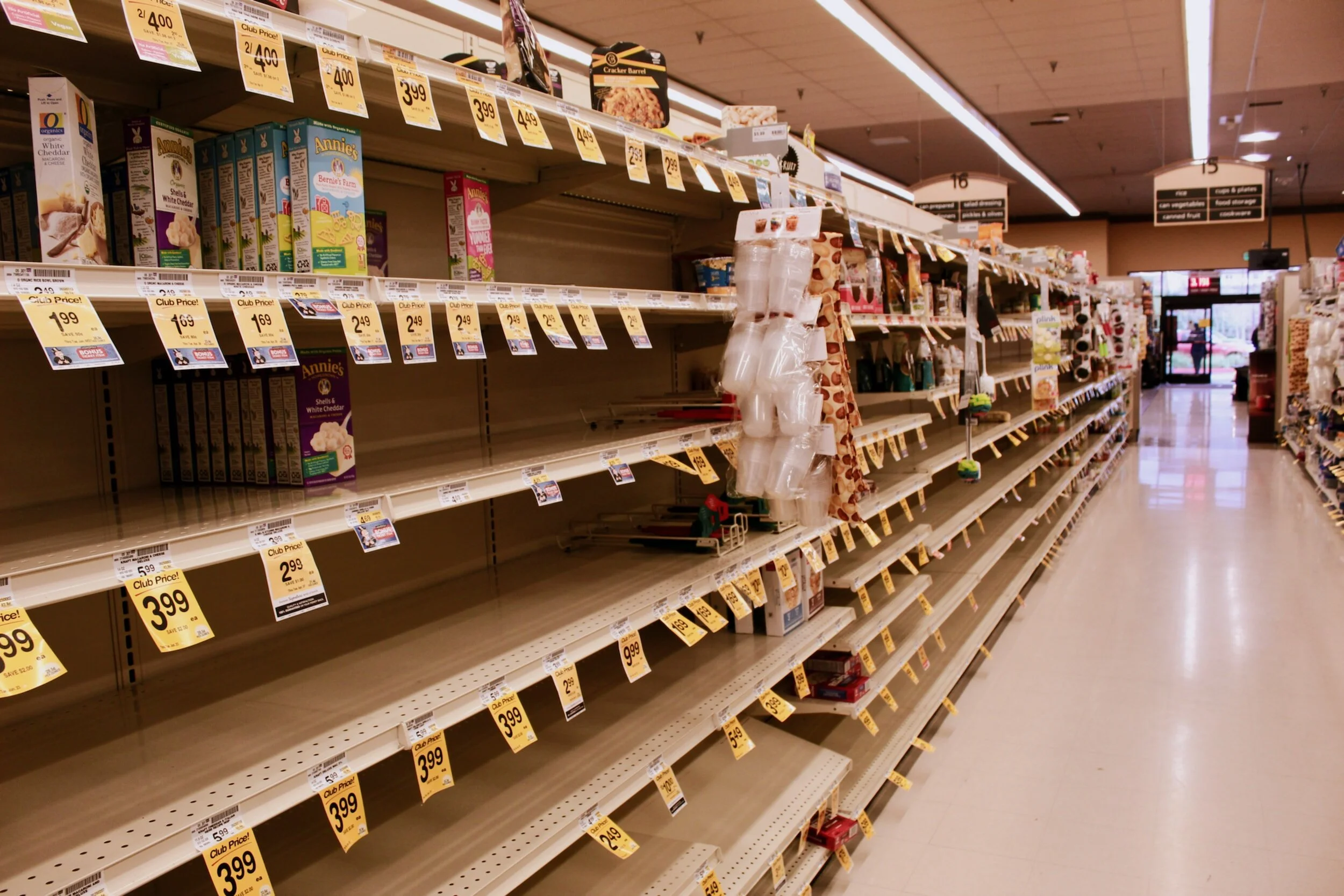
Monday, I ran into a supermarket for the first time since our collective world changed with the addition of the word “Coronavirus” to our lexicon. I was struck by certain sections of the market:

  • Organic produce

  • Rice

  • Beans

  • Bottled water

  • Toilet paper (of course)

They were decimated by nervous shoppers. Many times in my life I’ve experienced similar “runs on the grocery store” when weather, terrorist attacks, past pandemics, and other “exogenous” events occurred. Our limbic (fight or flight) brains kick in to protect ourselves, and we behave in a way that may seem irrational to a casual observer.

At that moment in the supermarket I felt a strong parallel to the stock market, where nervous investors have decimated many sectors of the market as their limbic brains have triggered a “sell everything” reaction to recent events. And while I understand the desire to act on these emotive responses, my experience tells me that this can be a mistake.

I have seen these emotions and corresponding behaviors before. Notably in 1987’s “Black Monday”, 1998’s “Asian contagion”, 2000’s “tech wreck”, 2001’s “9/11”, and of course the 2008/2009 “great recession”. The “why” behind these stock market routs occurred were all different, but what made them similar was FUD: Fear, Uncertainty, and Doubt. And the collective response of investors led to steep market declines. But ultimately, in every case, an economic recovery led to higher markets.

And while this time could be different, the risk I believe we will simply have to endure once again is “how long” will the current reality last? Nobody knows for certain, but I personally envision a time in the not too distant future when the supermarkets will be well stocked, and order will return to the economic system and the stock market.

As human beings, and Americans, we have a history of navigating uncertainty and innovating our way through challenges. I believe we will get to the other side of the COVID-19 challenge together and grow through the process.

Good health and safety to you and your loved ones in the meantime.


Suggested Reading


Read More