

SJS News Scott Savage SJS News Scott Savage

SJS Is Open For Business With You In Mind!

We made adjustments to our physical workspaces. And hopefully our service to you appeared seamlessly uninterrupted. That’s what you deserve.
Yesterday I held my first face-to-face meeting with a prospective client since the early days of March.

We sat together at a conference table, although not too closely together given all of the guidance we have received.

But it felt good to interact in person.

From Arizona to Ohio to points beyond and between, governors and health directors seem to be signaling a new spirit of social reengagement.

Thoughtfully and carefully to be sure, each and every household is balancing health and well-being and finding their own equilibrium.

Business interactions and social interactions are finding new footing. Large gatherings and intimate gatherings are likely further off in the future.

At SJS, your professional advisory team modified their work schedules and locations in March and April, but we remained operational as we conduct financial transactions and were dubbed an essential service. Some of our colleagues have worked remotely. Others have been safe and comfortable commuting to individual offices, mindful of the health concerns that have spanned our nation and the globe.

We have strived to answer phones, answer emails, and continue to be responsive to you and all of our clients while working diligently on your behalf.

You may or may not have known that we made adjustments to our physical workspaces. And hopefully our service to you appeared seamlessly uninterrupted. That’s what you deserve.

With sensitivity to the public backdrop and the current social trajectory, we want you to know that SJS is open for business!

We have been and remain available to talk with you or meet with you, under whatever circumstances you prefer.

There may be a “transitional” normal, but we are striving to get back to normal nonetheless.

Our team is energized by the hope and expectation that we have turned the corner on public health concerns and the social and economic upheaval we’ve never before experienced. We will continue to manage through challenging investment markets on your behalf, whatever may come our way.

For 25 years, SJS has strived to live by the maxim: You come first. All the time. Every time.

We remain committed to you and look forward to seeing you before long!


Very truly yours,

Scott J. Savage
Founder and CEO


Suggested Reading


Read More
Financial Planning Scott Savage Financial Planning Scott Savage

Grocery Stores And Equilibrium

As Americans, we have a history of navigating uncertainty and innovating our way through challenges. I believe we will get to the other side of the COVID-19 challenge together and grow through the process.

By SJS Founder & CEO Scott Savage.

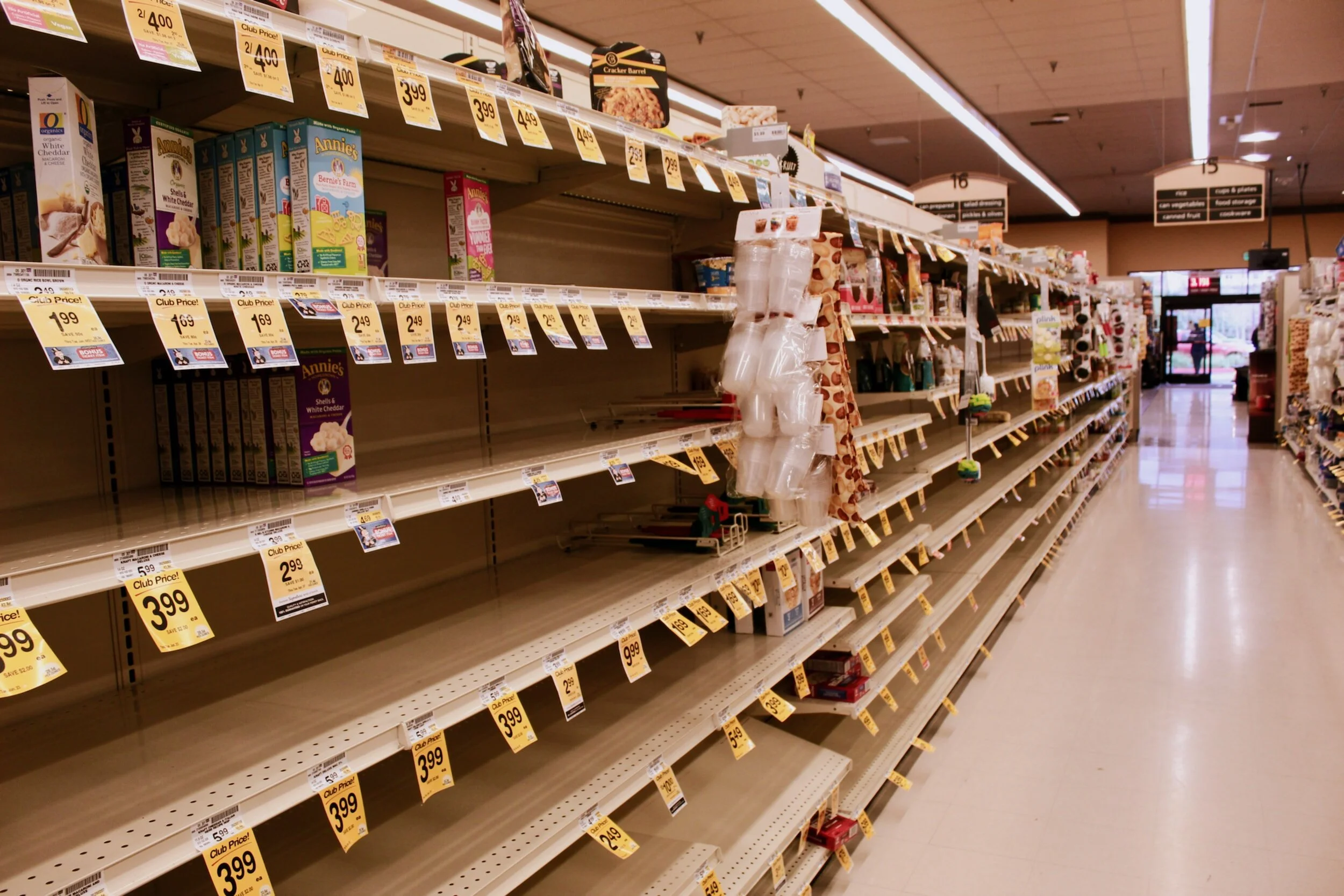
Monday, I ran into a supermarket for the first time since our collective world changed with the addition of the word “Coronavirus” to our lexicon. I was struck by certain sections of the market:

  • Organic produce

  • Rice

  • Beans

  • Bottled water

  • Toilet paper (of course)

They were decimated by nervous shoppers. Many times in my life I’ve experienced similar “runs on the grocery store” when weather, terrorist attacks, past pandemics, and other “exogenous” events occurred. Our limbic (fight or flight) brains kick in to protect ourselves, and we behave in a way that may seem irrational to a casual observer.

At that moment in the supermarket I felt a strong parallel to the stock market, where nervous investors have decimated many sectors of the market as their limbic brains have triggered a “sell everything” reaction to recent events. And while I understand the desire to act on these emotive responses, my experience tells me that this can be a mistake.

I have seen these emotions and corresponding behaviors before. Notably in 1987’s “Black Monday”, 1998’s “Asian contagion”, 2000’s “tech wreck”, 2001’s “9/11”, and of course the 2008/2009 “great recession”. The “why” behind these stock market routs occurred were all different, but what made them similar was FUD: Fear, Uncertainty, and Doubt. And the collective response of investors led to steep market declines. But ultimately, in every case, an economic recovery led to higher markets.

And while this time could be different, the risk I believe we will simply have to endure once again is “how long” will the current reality last? Nobody knows for certain, but I personally envision a time in the not too distant future when the supermarkets will be well stocked, and order will return to the economic system and the stock market.

As human beings, and Americans, we have a history of navigating uncertainty and innovating our way through challenges. I believe we will get to the other side of the COVID-19 challenge together and grow through the process.

Good health and safety to you and your loved ones in the meantime.


Suggested Reading


Read More
Financial Planning Thomas Kelly, CFA Financial Planning Thomas Kelly, CFA

Working To Control What You Can

We can identify the risks we know of, craft an appropriate plan given those risks, act according to the plan, update the plan using new information, and repeat.
By SJS Senior Client Portfolio Manager Tom Kelly, CFA

Every day, events happen that are outside our control.

While we may not be able to control what happens around us, what we can do is identify the risks we know of, craft a plan to act appropriately given those risks, act according to the plan, update the plan upon receiving new information, and repeat this process. This tends to be true in health-related matters as well as with investing.

SJS previously wrote about the coronavirus, and our general message stays the same. Since that post, there has been more significant stock market volatility, a new oil price war between Saudi Arabia and Russia, as well as continued societal consequences worldwide due to the spread of the coronavirus.[1]

Here are a few key insights regarding our thought processes and systems in light of the recent stock market volatility and associated news events.

Educate yourself with reliable sources intended to help the general public.

Generally, and particularly in uncertain times, it is critical to receive information and lessons from the most reliable sources who intend to help the general public. Over the past few weeks, many news sources have published a lot of sensationalized stories with little-to-no new and useful information for helping people handle the consequences of the coronavirus. At SJS, we focus on high-quality information from sources including the Center for Disease Control (CDC) and World Health Organization (WHO).[2],[3]

Focus on important short-term and long-term economic indicators.

Long-term investors focus on fundamental economic conditions that drive returns, as well as market valuations relative to those fundamentals. For well-diversified global portfolios, general economic growth (as measured by indicators including gross domestic product (GDP)) drives much of the stock market returns that clients will realize over the long-term. Most economic firms believe that although GDP growth will slow down in the short-run, the coronavirus and oil effects should not significantly alter long-run economic growth expectations, which is what long-term investors should focus on.[4]

Design portfolios that can grow from risk and uncertainties.

Many studies have shown that asset allocation (deciding how much of your portfolio to allocate to stocks and bonds, respectively) drives over 90% of variability of returns, meaning that individual security selection and market timing have little positive impact on expected returns for most investors.[5] In light of this, SJS works closely with each client to develop a well-diversified global portfolio using institutional quality mutual fund that is true to the client’s goals and risk tolerances. (Diversification neither assures a profit nor guarantees against a loss in a declining market.)

For stocks, SJS invests globally in 10,000+ securities through institutional quality mutual funds, understanding these funds will move similarly with general stock markets. For bonds, SJS invests primarily (90%+) in thousands of high-quality investment grade securities, also using institutional quality mutual funds, which tend to perform relatively stable or even positively during times when stock markets are volatile.[5] For example, over the past few days, non-investment grade credit bonds (especially in the energy sector) have decreased significantly in price (likely in part due to the new oil price war), while most high-quality bonds have increased in value.[1] A portfolio consisting of a well-diversified mix of stocks and high-quality bonds is not expected to experience the same volatility or losses as what general stock markets will experience.[6]

Rebalance to influence risk, improve returns, and tax loss harvest.

During volatile stock market periods, rebalancing according to a robust systematic process can both move the portfolio back to targeted expected risk characteristics, with the goal of improving long-term portfolio performance due to selling more highly valued bonds and buying lower valued stocks.[7] Additionally, volatile stock periods tend to provide more tax-loss harvesting opportunities, which may increase long-term after-tax expected return. SJS has robust systems and processes in place to facilitate such rebalancing and has been working with clients to perform any relevant trades over the past several weeks.

History does not repeat itself, but it does rhyme.

Over the past 50 years, the world has experienced many significant stress events, due to health concerns, economic issues, wars, and so on. Below is a chart of the MSCI World Index since 1970 detailing performance and associated stress events.[8]

Additionally, over the past 100+ years, the world has experienced major pandemics like the Spanish Flu (1918-1920), which impacted roughly 27% of the world’s population.[9] Below is a graph of the S&P 500 and associated performance during and after these pandemics.[10]

Throughout these events, people reacted with resilience, and markets continued to function.

Sudden and complex events will happen. We do not know what these events will be, nor exactly when these events will happen – but we know that they will happen. We believe in the resilience of human beings, and accordingly we believe in the long-term growth prospects of global economies and investment markets. Because of this uncertainty and risk, we at SJS help clients focus on what they can control and allow markets to do the rest. We continue to recommend that our  clients rely on MarketPlus Investing to stay invested in well-diversified global portfolios true to each of their goals and risk tolerances.

If you have specific questions or concerns, please call us. We’re always here to explain and assist.


Sources:

[1] “High-Yield Bonds Are Sinking as Bankruptcy Fears Hit the Oil Patch.” Alexandra Scaggs, barrons.com.

[2] “Coronavirus Disease 2019 (COVID-19).” Center for Disease Control and Prevention, cdc.gov.

[3] “Coronavirus disease (COVID-19) outbreak.” World Health Organization, who.int.

[4] “S&P: Coronavirus to trim 2020 global GDP growth by 0.3 percentage point.” S&P Global, spglobal.com.

[5] Unconventional Success. David Swensen, 2005.

[6] “3 Reasons Why You Should Invest in Bonds.” Nick Maggiulli, ofdollarsanddata.com.

[7] “Opportunistic Rebalancing: A New Paradigm for Wealth Managers.” Gobind Daryanani, fpanet.org.

[8] In US dollars. Source: Avantis Investors. MSCI data © MSCI 2019, all rights reserved. Indices are not available for direct investment. Their performance does not reflect the expenses associated with the management of an actual portfolio. Past performance is no guarantee of future results.

[9] “1918 Pandemic (H1N1 virus).” Center for Disease Control and Prevention, cdc.gov.

[10] In US Dollars. Sources: Avantis Investors, using data from Robert Shiller Data Collection at Yale University and Centers for Disease Control and Prevention. S&P 500® Composite Index does not include reinvested dividends.

Important Disclosure Information

Indices are not available for direct investment. Their performance does not reflect the expenses associated with management of an actual portfolio. Mutual fund investment values will fluctuate, and shares, when redeemed, may be worth more or less than original cost. Diversification neither assures a profit nor guarantees against a loss in a declining market. There is no guarantee investment strategies will be successful. Past performance is no guarantee of future results.


Suggested Reading


Read More
Financial Planning Thomas Kelly, CFA Financial Planning Thomas Kelly, CFA

Resilience In The Face Of The Coronavirus

SJS believes in the resilience of people and markets to respond well in the face of new obstacles, with the current coronavirus as no exception.

By SJS Senior Client Portfolio Manager Tom Kelly, CFA

Human beings have incredible resilience. When facing obstacles, humans tend to find solutions and persevere, often growing stronger from the experiences.

One recent obstacle is the coronavirus (officially known as COVID-19), an infectious virus that began in Wuhan, China in December 2019.[1] As of February 24, 2020, the coronavirus has affected roughly 80,000 people, resulting in roughly 2,600 deaths. More than 77,000 of these cases – and all but 23 deaths – have occurred in China.[2]

There is significant optimism among infectious disease health experts that the coronavirus will be contained relatively soon. Researchers globally have examined the genome of the coronavirus and have discovered the corresponding infectious proteins.[3] Governments and agencies around the world are considering ways to potentially slow down the spread of the virus, instituting travel procedures and other preventative measures. Additionally, leading global health agencies, including the World Health Organization, and major pharmaceutical companies are devoting tremendous resources to develop vaccines and treatments.[1]

In the past 100 years, the world has experienced many sudden infectious health diseases, including the West Africa Ebola epidemic in 2014, Swine Flu from 2009-2010, SARS in 2003, and the Spanish Flu from 1918-1920. Some of these sudden diseases were significantly greater in magnitude and severity than the current coronavirus. During these past periods, global stock markets experienced some short-term volatility that had little to no significant effects on intermediate- or long-term returns.[4]

Much of the short-term volatility in these past periods is consistent with general market movements, making it difficult to determine if these sudden infectious diseases even caused significant movements in the stock market in the first place.

Additionally, high-quality bonds have experienced little volatility during these periods, and have often increased in market value as investors moved money into safer bond investments.[5]

The stock market, general economic conditions, and societal health trends are a few of the forces that are in constant flux. You may find refuge in knowing that while utilizing our MarketPlus Investing® portfolios, we have worked with you to design low-cost portfolios diversified across many countries and asset classes that we believe can withstand and grow from these uncertain forces. (Diversification does not eliminate the risk of market loss.)

Your team at SJS continually monitors current and historical influences, forms judgments and, in turn, makes decisions about portfolio adjustments, tax saving strategies, and estate and legacy recommendations. We spend our time studying and following these developments, so you don’t have to.

SJS believes in the resilience of people and markets to respond well in the face of new obstacles, with the current coronavirus as no exception. Thus, ­we recommend you continue to rely on MarketPlus Investing to stay invested in your well-diversified global portfolio true to your goals and risk tolerances. Further, you may take solace in knowing that short-term market volatility typically allows us to rebalance portfolios in more tax-efficient ways that may improve your long-term investment experience.

If you have specific questions or concerns, please call us. We’re always here to explain and assist.


Sources:

[1] “Q&A on coronaviruses (COVID-19).” World Health Organization, who.int.

[2] “Coronavirus disease (COVID-2019) situation reports.” World Health Organization, who.int.

[3] “How Bad Will the Coronavirus Outbreak Get? Here Are 6 Key Factors.” Knvul Sheikh, Derek Watkins, Jin Wu, & Mika Grondahl, New York Times. February 7, 2020.

[4] “How Will Coronavirus Affect Your Portfolio?” Nick Maggiulli, Of Dollars and Data. February 11, 2020.

[5] In US dollars. Source: Dimensional Fund Advisors, using data from Bloomberg LP. Includes primary and secondary exchange trading volume globally for equities. ETFs and funds are excluded. Daily averages were computed by calculating the trading volume of each stock daily as the closing price multiplied by shares traded that day. All such trading volume is summed up and divided by 252 as an approximate number of annual trading days.

Important Disclosure Information:

Past performance does not guarantee future results. Diversification does not eliminate the risk of market loss. MarketPlus Investing® models consist of institutional quality mutual funds.


Suggested Reading


Read More